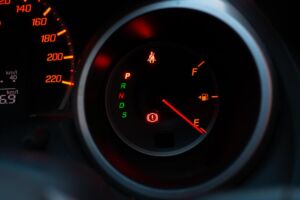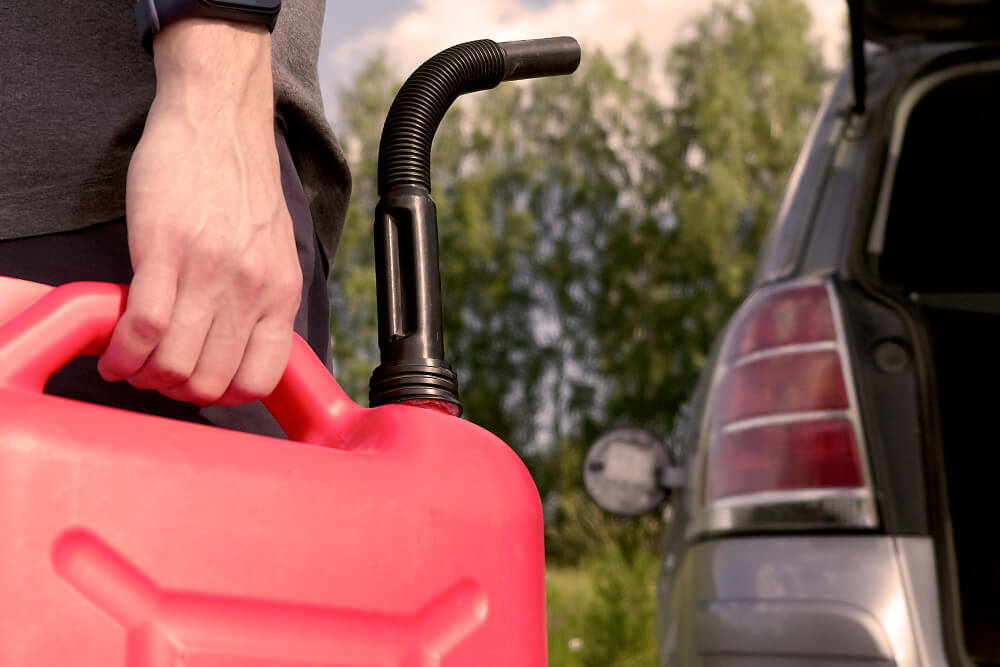
Most drivers have been closer to an empty tank than they would like to admit. The low fuel warning light flicks on, you tell yourself there is probably enough to get home, and for most people, that gamble pays off. But when it does not, what actually happens to your car?
Running out of gas is more than a short-term inconvenience. There is a sequence of events that takes place under the hood the moment your tank hits empty, and some of those effects are worth understanding before they catch you off guard. This article covers what happens when you run out of gas, which parts of your vehicle carry the most risk, what warning signs to watch for afterward, and the safest steps to take if you end up stranded. For drivers in Charlotte, Gastonia, Pineville, and Matthews who need a helping hand to deliver fuel, Sunny Day Towing and Auto Transportation is available 24 hours a day at (704) 504-7449.
What Actually Happens the Moment Your Car Runs Out of Gas
The first thing most drivers notice is a sputtering sensation from the engine, followed by a loss of power and then a full stall. It can feel gradual or it can feel sudden, depending on how the last drops of fuel are distributed in the tank. Either way, the engine stops receiving the fuel it needs to sustain combustion, and it shuts down.
What catches many drivers off guard in that moment is what else stops working. In most modern vehicles, power-assisted steering and power brakes both rely on the engine running to function properly. Once the engine cuts out, both systems lose their assist. The car becomes noticeably harder to steer and requires considerably more pedal pressure to slow down. At highway speeds, that sudden change in how the vehicle responds can be disorienting and genuinely dangerous if a driver is not prepared for it.
What Running Out of Gas Does to Your Fuel Pump
The engine understandably gets most of the attention during a breakdown, but the fuel pump often takes on more strain during a run-dry event than any other component.
Why the Fuel Pump Takes the Hardest Hit
In most modern vehicles, the fuel pump sits inside the gas tank. This is by design. The fuel surrounding the pump acts as both a coolant and a lubricant, keeping the pump operating within a safe temperature range during normal use. When the tank runs dry, the pump loses that surrounding fuel and begins running without the cooling and lubrication it was built to depend on. Even a brief period of running without fuel can cause the pump to overheat, and repeated dry runs accelerate wear on the pump over time.
The Sediment Problem
Fuel tanks also accumulate small amounts of sediment over the years. Dirt, rust particles, and other debris settle naturally to the bottom of the tank, where they typically stay undisturbed as long as the fuel level stays reasonably high. When the tank runs very low, the pump begins drawing from that bottom layer, pulling settled sediment directly into the fuel line. From there, it can reach the fuel filter and injectors, causing partial clogs that show up later as rough engine performance or reduced fuel efficiency. It is one of those chain reactions that does not always reveal itself right away, which is part of what makes running completely dry more consequential than most drivers realize.
Does Running Out of Gas Actually Damage the Engine?
This is the question most drivers want answered, and the honest answer is nuanced.
A single incident of running out of gas is unlikely to cause lasting engine damage on its own. Engines are generally more resilient to a brief fuel interruption than the fuel pump and injectors are. That said, a dry run is not entirely without risk. The components most vulnerable to harm, specifically the fuel pump and injectors, are also among the more expensive repairs a driver can face. A fuel pump replacement can range from a few hundred dollars to well over a thousand depending on the vehicle make and model.
Running out of gas repeatedly over time is where cumulative risk becomes a real concern. Each dry run places additional strain on the pump and increases the chance that sediment has traveled further into the fuel system. One incident is an inconvenience. A recurring pattern becomes a maintenance problem that tends to show up at the worst possible time.
Warning Signs to Watch For After Running Dry
If your tank recently hit empty, it is worth paying attention to how your vehicle performs in the days that follow. Not every symptom means something has been damaged, but they are worth monitoring and mentioning to a mechanic if they persist or worsen.
- Engine hesitation or rough idling: Stumbling during acceleration or uneven idling at a stop can point to sediment in the injectors or a disruption in fuel delivery.
- Difficulty starting after refueling: The pump may have drawn in air during the dry run, making it work harder to re-prime the fuel system properly.
- Unusual sounds near the fuel tank: A whining or buzzing from the tank area can sometimes indicate a fuel pump under stress.
- Reduced fuel efficiency: A partial injector clog from sediment can cause the engine to burn fuel less efficiently without producing obvious symptoms right away.
- A check engine light appearing shortly after: Not always connected, but worth investigating if it shows up close to a run-dry event.
Any of these signs that linger more than a day or two are worth a diagnostic check with a mechanic rather than waiting to see if they resolve on their own.
What to Do When You Run Out of Gas
Responding quickly and calmly in the moment makes the situation significantly more manageable. Here is a clear sequence to follow.
Step One: Get the Vehicle to Safety
If there is any remaining momentum when the engine cuts out, use it. Steer toward the nearest shoulder, pull-off point, or parking area. Turn on your hazard lights immediately, even before the car has fully stopped moving.
Step Two: Stay With the Vehicle When It Is Safe to Do So
Walking to the nearest gas station is a natural instinct, but it is not always the right call. Highway shoulders and unfamiliar roads carry real risks for pedestrians, and gas stations are often farther than they appear on a phone map. Add the task of carrying a full gas can back along a busy road, and the risk increases further. In most situations, staying with the vehicle and calling for help is both safer and faster.
Step Three: Call for Help
Fuel delivery services exist precisely for situations like this one. If you are stranded in Charlotte or a nearby area like Gastonia, Pineville, or Matthews, reach us at Sunny Day Towing and Auto Transportation at (704) 504-7449. We provide fuel delivery so you can get back on the road without the added stress of handling it on your own.
How to Avoid Running Out of Gas in the First Place
A few consistent habits can make running out of gas a much rarer event without requiring much effort.
Treating the quarter-tank mark as your personal refueling trigger, rather than waiting for the low fuel warning light, gives you a reliable buffer and reduces unnecessary wear on the fuel pump over time. During winter months, keeping the tank at least half full also helps prevent moisture from accumulating inside the tank, which can lead to its own set of fuel system issues. On long drives or unfamiliar routes where gas stations may be spaced further apart, filling up earlier than you normally would is a simple and practical precaution. The minor inconvenience of an extra fuel stop is always easier to deal with than the inconvenience of an empty tank on the side of a road.
The Bottom Line
Understanding what happens when you run out of gas changes how you think about that low fuel warning light. The engine stalls, steering and braking become harder to manage, and the fuel pump takes on real stress without the cooling fuel it depends on. Sediment gets stirred into the fuel line, injectors can be affected, and repeated dry runs build up wear over time.
One incident, responded to quickly and calmly, rarely leads to serious damage. Getting to safety, staying with the vehicle, and calling for help are the most important steps in the moment. If you ever find yourself stranded in Charlotte, Gastonia, Pineville, Matthews, or anywhere in the surrounding area, Sunny Day Towing and Auto Transportation is available around the clock. Reach us at (704) 504-7449 and we will take care of getting you back on your way.